Wednesday, February 18, 2015

Danger Will Robinson...The Robots Are Coming!

Here at Personal Beasties we have been reading, with interest, all the fascinating Elon Musk quotes in the media, regarding his $10M pledge to the Future of Life Institute for research to "keep AI beneficial" and protect humanity from the potential evils of rouge Artificial Intelligence systems.
"With artificial intelligence we are summoning the demon. In all those stories where there’s the guy with the pentagram and the holy water, it’s like yeah he’s sure he can control the demon. Didn't work out."
Our immediate reaction to this quote was, how very Personal Beasties!

Throughout the ages we have delighted in sharing stories of humanities attempts to tame inner demons or beasties by illustrating exciting struggles between heroes and fantastical outer demons/beasties;

"When the demigods slew monsters, they were also slaying the bestial part of themselves and of humanity…Humanity had been given animal consciousness, but that gift carried with it a danger for every human being -- the danger of turning bestial and monstrous."
Mark Booth The Sacred History
Personal Beasties, of course, is all about leveraging technology to help tame the beasties within and we recently learned about a fabulous organization, here in NYC, at New York University Langone's Child Study Center.

The Child Study Center has a program called Trauma Systems Therapy (TST) in which children learn to identify, experience and safely express emotions, sometime using breathing techniques when necessary. Foster care workers as well as foster parents are also trained in TST, "to help make them more empathetic and tolerant of a child’s behavior."

At Personal Beasties, we applaud the work of the team at NYU Langone's Child Study Center and we hope that Elon Musk and his luminous contemporaries will soon understand that donations to organizations such as this may be the ideal way for us to defend humanity from the dangers of rampant AI systems.

As Stephen Hawkins's says, these systems have the potential to "spell the end of the human race." This is particularly relevant as consumers are on the verge of being seduced into mass AI culture with the entrance of sociable robots into the marketplace, particularly caregiving robots, given that this was the year that robots went personal at the 2015 Consumer Electronics Show (CES): "They listen, they speak, they react, they do what they’re told—they’re a help to us on a personal level…and way more."

Why is this potentially so dangerous?

Well, as Sherry Turkle explains in her letter to the New York Times; "Robots proposed as 'caring machines' fool us into thinking they care about us. Maintaining eye contact, remembering our names, responding to verbal cues — these are things that robots do to simulate care and understanding."
And as Turkle explained in a 2011 PBS Nova piece on the subject; "We are outsourcing the thing we do best --understanding each other, taking care of each other…The danger is in the conditioning of humans to think that someone is there, when in fact there is nobody home…robots will disappoint us if we are looking for human connection."

NYU's Langone's Child Study Center and their TST program is the opposite of this doomsday scenario, rather than outsourcing caregiving, they are training caregivers and children in how to strengthen their inner human resources.

We at Personal Beasties are committed to this evolutionary approach, of taming our inner beasties with compassion…not in weakening our ability to care for others (and ourselves) through outsourcing our innate caregiving capabilities to robots.

"Every technology provides an opportunity to ask, “Does it serve our human purposes?” — a question that causes us to reconsider what these purposes are." Sherry Turkle

We feel that NYU's Langone Child Study Center should be used as the Gold Standard for a "Turkle Test" to assess all future technology driven, caregiver applications and mechanisms coming down the pike, which try to seduce us with promises of improved efficacy and the nirvana of saving precious time.

Saturday, March 29, 2014

Pro's and Con's of #Screentime and Screen Based Media for Encouraging Behavior Change

We have been actively tracking articles on the effects of screen time on children, as they appear in the press. Yesterday The British Psychology Society posted a write up on a new study... "Children who spend too much time in front of TV screens and electronic devices could be at risk of damaging their wellbeing".

 The results are rather profound:"It was found that electronic media seemed to be linked to poorer wellbeing, with the risk of emotional problems increasing with every additional hour of watching TV or electronic game and computer use."

 But here is the conundrum, many application developers and academics have been excited for the past fifteen years or so about leveraging digital media to promote wellbeing. The booming activity tracker space and quantified self movement all harness screen based media with goal setting and progress data tracking for just this purpose.

 Time will tell, as there are many ongoing studies weighing the pro's and con's, and eventually we will have a better understanding on not only the efficacy of screen based media for encouraging behavior change but also the potential risks involved for consumption of screen based media in general.
image credit:
http://www.text100.com/hypertext/2012/07/the-digital-self-how-to-use-data-become-a-better-worker/

Thursday, December 26, 2013

Microsoft's Stress Sensor Bra and Playful R&D

Personal Beasties started out as a student project at Red Burns' Interactive Telecommunications Program, part of NYU's Tisch School of the Arts. Though Red Burns passed away this past September, the influence she has had on other graduate programs and corporate R&D facilities is quite evident.

Red established the ITP program fueled by her passionate desire to create a space where graduate students could PLAY with technology.

PLAY, is the operative word here.

Through the act of "playing" most Burns'ian inspired ITP students aim to unleash and tame technology through empowering and improving peoples lives. Red's playful ITP format was so successful, she influenced most technology focused graduate programs that sprang up after the initial dot com boom. But Red's playful spirit lives on, as well, in corporate research facilities like Microsoft Research.

Just a few short weeks ago there was a media tizzy over a bra stuffed with stress sensors that researchers at Microsoft were playing with. Playing with, in hopes of improving peoples lives. The bounty of challenging press the project generated will hopefully not discourage their efforts, but will ideally inform their optimization efforts...because in my mind, this stress reduction bra fits right into Red's playful ITP philosophy.

One way to illustrate this is to comment on the recent winter 2013 ITP Winter Show. My favorite project was Birdveillance, Jason Sigal's whimsical facial recognition and text-to-speach eavesdropping surveillance device, that posts content to an oh so appropriate @birdveillance twitter feed.

Like the Microsoft bra, Birdveillance may not be ready for prime time, but both are certainly thought provoking and playful research projects exploring and commenting on immediate societal concerns; too much stress in our lives and the ongoing privacy debate over our current surveillance state.

Thanks to Red Burns, we here at Personal Beasties, continue to play with both software and hardware to raise awareness regarding the impact taking a few deep breaths has on stress and anxiety. With Red Burns' legacy to inspire us, we encourage all like minded technologists to keep publishing your playful technology explorations no matter how much challenging feedback your projects may generate.


Friday, October 11, 2013

Wisdom 2.0...Self Help and Labor in the digital age?

When I attended Wisdom 2.0 this past winter in San Francisco, and the Wisdom 2.0 Business NYC reception last month, I felt that a key influential voice that was missing....Micki McGee's.

I read McGee's book, Self Help Inc. in 2009, and was blown away. In this book she "shows how the rise of makeover culture has left Americans not just overworked, but belabored: constantly at work on themselves, anxious to remain employed and employable."

Given that Personal Beasties has always focused on Taming the Beasties within... here was a perspective that challenged our team to be vigilant and respectful of the innate instinct for freedom in all humans:

“If you assume that there is no hope, you guarantee that there will be no hope. If you assume that there is an instinct for freedom, that there are opportunities to change things, then there is a possibility that you can contribute to making a better world.” Noam Chomsky

  • Do we want our application to be perceived as another emotional intelligence tool that boosts productivity?
Or
We are choosing the latter, by sponsoring Breathing Breaks, in coordination with employers who realize that to; counteract negative the health effects caused by spending long hours interacting with computers, we can either reduce interaction with electronic screens or incorporate relaxation techniques into our daily routines.


subscribe to personal beasties mailing list

* indicates required
Email Format

Friday, September 27, 2013

Movie Review: Free the Mind

Having heard Richard Davidson interviewed in the past, I was excited to see that he was the subject of a new documentary, Free the Mind, that played recently at the Quad Cinema, here in NYC.

This is my favorite clip form the movie because it offers a visual explanation on the benefits of emotional intelligence.

At Personal Beasties we are all about visual explanations >;) 


‘Richard Davidson about compassion meditation’ - a clip from Free the Mind a documentary by Phie Ambo from Danish Documentary on Vimeo.


Monday, June 3, 2013

manifesto diorama

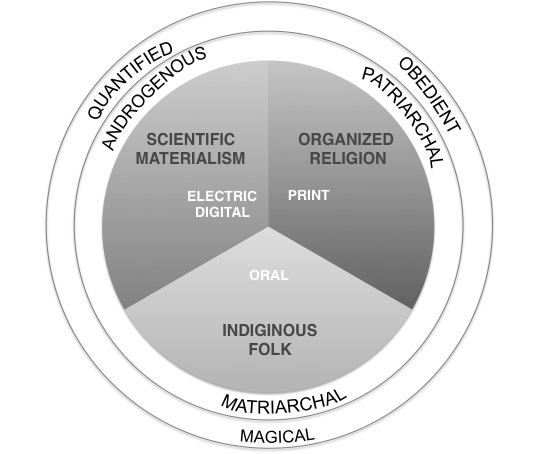
Below is a circle that we will use to contain the macro context for the micro application representing the patented utility of Personal Beasties Group, LLC., US Patent No: 6,769,915 (Interactive system for personal life patterns)


We then divide the circle into three sections, which reference the evolution of communication technology.


We then pair with these technologies the social constructs that seem an appropriate match.


Additional segmentation helps us to further associate cultural archetypes...


and ways of thinking or being.... 


Lastly, we layer on what we are most interested in exploring... the psychological locus of control theory associated per segment.